
Modern manufacturing industries are under constant pressure to improve ivity, reduce operational costs, and maintain consistent quality. Traditional heating methods often struggle to meet these expectations because they consume more energy, take longer heating cycles, and create uneven temperature distribution.
This is where the industrial induction heater has transformed metal processing operations. From forging and hardening to brazing and billet heating, induction heating technology offers faster, cleaner, and more energy-efficient performance for industrial manufacturers.
At Gururaj Engineers, industries rely on advanced induction heating solutions to improve ion efficiency while maintaining precision and reliability in demanding industrial environments.
What Is an Industrial Induction Heater?
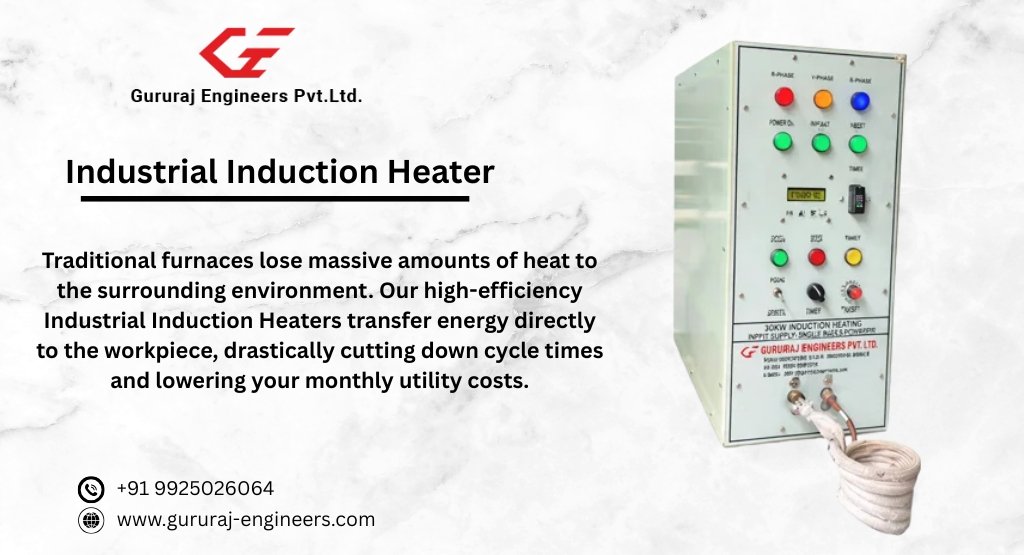
An industrial induction heater is a non-contact heating system that uses electromagnetic induction to heat conductive metals quickly and accurately. Instead of transferring heat from an external source, the metal itself generates heat internally through induced electrical currents.
This process allows industries to achieve rapid heating with minimal energy loss and highly controlled temperature accuracy.
Unlike conventional furnace heating, induction systems focus heat only where it is needed, making them ideal for modern industrial automation and metal processing applications.
How Does Induction Heating Improve Metal Processing Efficiency?
One of the biggest reasons manufacturers switch to induction technology is operational efficiency. Conventional heating methods often waste heat, increase processing time, and require extensive maintenance.
A high frequency induction heater improves efficiency by delivering:
- Faster heating cycles
- Reduced power consumption
- Better process control
- Minimal heat loss
- Cleaner working environments
- Improved consistency
Because induction heating directly heats the metal component, industries can significantly reduce processing delays and improve throughput.
Faster Heating Means Higher Production Output
In industrial ion, heating speed directly impacts manufacturing capacity. Traditional fuel-based systems require long warm-up periods, while induction systems start almost instantly.
For example, an induction forging heater can heat metal billets within seconds or minutes depending on material size and required temperature. This allows manufacturers to process more components in less time without compromising quality.
Faster cycle times also help reduce machine idle time and improve overall ion efficiency.
Why Is Temperature Precision Important in Metal Processing?
Precise temperature control is critical in industries like automotive, aerospace, engineering, and heavy machinery manufacturing.
Even slight temperature variations can affect:
- Metal hardness
- Structural strength
- Surface finish
- Product durability
- Heat treatment quality
An advanced induction hardening equipment setup ensures accurate and repeatable heating patterns. Operators can precisely control heating depth, temperature range, and cycle timing according to application requirements.
This level of control reduces rejection rates and improves manufacturing consistency.
Energy Efficiency Benefits of Industrial Induction Heating
Energy costs are one of the biggest concerns for industrial manufacturers. Conventional heating systems often lose a large amount of heat through radiation and surrounding air exposure.
An industrial induction heater minimizes energy waste because heat is generated directly inside the metal component.
Key Energy Saving Advantages
- Reduced electricity consumption
- Lower heat loss
- Faster startup and shutdown
- Improved thermal efficiency
- Lower cooling requirements
Many industries experience noticeable reductions in operational energy costs after upgrading to induction-based heating systems.
Applications of Industrial Induction Heaters
Induction heating technology is widely used across multiple industrial sectors because of its flexibility and efficiency.
Billet Heating Systems: A billet heating system is commonly used in forging industries to heat metal rods and billets before shaping operations. Induction billet heaters provide uniform heating and better material flow during forging.
Metal Hardening: Induction hardening is widely used for gears, shafts, tools, and machine components requiring surface hardness and wear resistance.
Brazing and Soldering: Induction systems deliver localized heating, making them suitable for precision brazing applications where controlled heat is essential.
Heat Treatment Processes: Industrial manufacturers use induction systems for annealing, tempering, and stress-relieving operations.
Industrial Induction Heater vs Conventional Heating Systems
Many buyers compare induction heating with furnace-based or flame-based heating methods before investing.
This comparison clearly shows why modern industries are moving toward induction-based heating systems for long-term operational efficiency.
Common Buyer Considerations Before Choosing an Induction Heating System
Selecting the right induction heating equipment depends on ion goals, material type, and process requirements.
Heating Capacity: Choose a system based on component size, material thickness, and target temperature range.
Frequency Range: A high frequency induction heater is ideal for surface hardening and smaller components, while lower frequencies are suitable for deeper heating applications.
Automation Compatibility: Industries increasingly prefer induction systems that integrate with automated ion lines and PLC controls.
Cooling System: Efficient cooling systems help maintain stable operation and extend equipment lifespan.
At Gururaj Engineers, customized induction heating solutions are designed according to industry-specific operational needs and ion requirements.
How Induction Heating Supports Sustainable Manufacturing
Manufacturers are increasingly focusing on sustainability and energy-efficient ion methods.
An industrial induction heater supports environmentally responsible manufacturing by:
- Reducing fuel dependency
- Lowering carbon emissions
- Minimizing workplace heat exposure
- Improving energy utilization
Cleaner operations also improve workplace safety and operator comfort compared to traditional combustion heating systems.
Expert Insight: Why Industries Are Rapidly Adopting Induction Heating
Industrial automation and smart manufacturing have increased demand for faster and more precise heating technologies.
Many manufacturers now prefer induction systems because they deliver:
- Consistent heating quality
- Reduced operational downtime
- Better process repeatability
- Improved quality
- Lower maintenance costs
This shift is especially visible in forging plants, automotive manufacturing, engineering workshops, and heavy industrial processing facilities.
Why Choose Gururaj Engineers?
Gururaj Engineers delivers reliable and performance-driven induction heating solutions for industrial applications. With a strong focus on quality, customization, and technical support, the company helps industries improve ivity and process efficiency.
- Customized industrial solutions
- Reliable heating performance
- Strong technical expertise
- Durable industrial-grade systems
- Responsive support and service
Whether industries require an induction forging heater, induction hardening equipment, or a complete billet heating system, Gururaj Engineers provides solutions designed for long-term industrial performance.
Conclusion
An industrial induction heater is no longer just an alternative heating method — it has become an essential technology for industries seeking higher efficiency, lower energy consumption, and precise process control.
From faster heating cycles to improved quality and reduced operational costs, induction heating technology offers significant advantages across modern manufacturing operations.
Businesses looking to upgrade their metal processing systems should invest in reliable, energy-efficient, and application-specific induction heating solutions that support long-term industrial growth.
What is the main advantage of an industrial induction heater?
The main advantage is fast and energy-efficient metal heating with precise temperature control and minimal heat loss.
Where is induction heating commonly used?
Induction heating is widely used in forging, hardening, brazing, annealing, billet heating, and metal heat treatment industries.
How does induction heating save energy?
Induction systems directly heat the metal component, reducing unnecessary heat transfer and minimizing energy waste.
What is the difference between induction hardening and conventional hardening?
Induction hardening provides localized and controlled surface heating, resulting in better precision and faster processing compared to conventional methods.
Which industries use billet heating systems?
Billet heating systems are commonly used in forging plants, automotive manufacturing, metal processing industries, and engineering workshops.
Looking for a reliable industrial induction heater solution for your manufacturing process?
Gururaj Engineers offers advanced induction heating systems designed for performance, energy efficiency, and industrial durability. Contact our team today to discuss your application requirements, request expert guidance, or get a customized quotation.

